People with oily, acne-prone skin benefit from moisturizers that balance hydration without clogging pores. This guide highlights dermatologist-recommended picks that tackle shine, support the skin barrier, and calm irritation. Each product below includes key features to help you compare options quickly, so you can choose a formula that fits your routine and skin goals.
| Product | Brand | Key Benefit |
|---|---|---|
| CeraVe Oil Control Gel-Cream | CeraVe | Oil absorption with Niacinamide and Hyaluronic Acid |
| Cetaphil Face Moisturizer (Mattifying Acne) | Cetaphil | Gentle, salicylic acid–driven acne care and hydration |
| Minimalist 10% Vitamin B5 Moisturizer | Minimalist | Oil-free hydration with Panthenol and Hyaluronic Acid |
| La Roche-Posay Toleriane Double Repair Matte | La Roche-Posay | Oil-free barrier repair with ceramides and niacinamide |
| EltaMD UV Clear SPF 46 | EltaMD | Lightweight sunscreen that doubles as a moisturizer for sensitive, acne-prone skin |
Each section below provides a concise overview, notable ingredients, and how the product fits into a daily routine. All descriptions focus on performance for oily and acne-prone complexions, with no price details included.
CeraVe Oil Control Gel-Cream

The CeraVe Oil Control Gel-Cream combines oil-absorbing technology with moisturizing agents to rebalance oily skin. It uses silica and other powders to reduce excess shine and maintains balanced hydration without making the skin feel greasy. The formula includes Hyaluronic Acid to retain moisture and Niacinamide to help calm the skin. MVE Technology provides hydration over time, making it a solid option for AM and PM use. This non-comedogenic, fragrance-free option is designed for daily wear, especially after other serums or eye creams have absorbed.
Cetaphil Face Moisturizer (Mattifying Acne)

This Cetaphil moisturizer is crafted to hydrate while addressing acne-prone, sensitive skin. The 0.5% Salicylic Acid helps treat and prevent breakouts, and the product aims to soothe redness and improve texture without clogging pores. The lightweight, fast-absorbing formula supports a matte appearance, which is beneficial for those dealing with excess oil. It is suitable for layering with sunscreen and makeup, making it a straightforward addition to a morning routine.
Minimalist 10% Vitamin B5 Moisturizer

This Minimalist moisturizer emphasizes oil-free hydration with a high concentration of Vitamin B5 (Panthenol) to support skin repair in oily and acne-prone types. The formulation also includes Hyaluronic Acid and Betaine to provide multi-level hydration, along with minerals like Zinc and Copper for antioxidant support. Niacinamide helps soothe and calm the skin, while the overall texture remains light and fast-absorbing. It’s designed for daily use, and its oil-free profile makes it compatible with other acne-focused products.
La Roche-Posay Toleriane Double Repair Matte
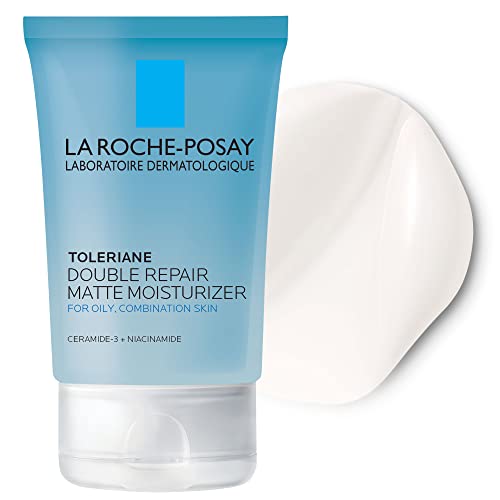
This matte-face moisturizer from La Roche-Posay targets oily skin with a dual-action approach: it delivers all-day hydration while maintaining a shine-free finish. The formula includes ceramides, niacinamide, and prebiotic thermal water to help restore the skin barrier. It absorbs quickly, supports texture improvement, and may help reduce the appearance of pores over time. It’s fragrance-free and designed for sensitive, acne-prone skin, with a lightweight gel-like texture ideal for daily use.
EltaMD UV Clear SPF 46

EltaMD UV Clear SPF 46 is a lightweight, oil-free sunscreen that also serves as a moisturizer for acne-prone skin. It uses transparent zinc oxide to block UVA/UVB rays without a white cast. Niacinamide and Hyaluronic Acid are included to support skin health and hydration, while antioxidants help promote a more even skin appearance. This product is suitable as a daytime base under makeup and is particularly favored for sensitive, acne-prone, or rosacea-prone skin types seeking both sun protection and a non-greasy feel.
Buying Guide: Key Purchase Considerations
Choosing the right moisturizer for oily, acne-prone skin involves weighing texture, active ingredients, and how the product fits into your routine. Below are practical considerations and comparisons to help you decide.
- Oil control vs. hydration balance: Look for matte or oil-absorbing formulations if you experience excess shine, but ensure the product still delivers adequate hydration to prevent overcompensation by the skin.
- Acne-focused actives: Salicylic acid (BHA) helps with pore clarity, while niacinamide supports barrier function and redness reduction. Consider your sensitivity and tolerance for active ingredients.
- Barrier-supporting ingredients: Ceramides, glycerin, hyaluronic acid, and panthenol help maintain skin moisture and resilience, which is crucial for acne-prone skin that may become irritated by treatments.
- Non-comedogenic and fragrance-free options: For those prone to clogged pores, choose products labeled non-comedogenic and fragrance-free to minimize irritation and breakouts.
- Sun protection synergy: If you prefer multitasking products, consider a sunscreen with additional skin-care benefits (niacinamide, hyaluronic acid) to simplify routines while protecting against sun damage.
- Texture and absorption: Gel-cream and gel textures generally absorb faster and are less likely to feel heavy on oily skin. Patch test new products to ensure compatibility with your skin.
- All-day hydration vs. short-term hydration: Some formulas deliver sustained hydration (MVE technology, for example), while others offer immediate but shorter-lived moisture. Choose based on your daily routine and environment.
- Layering compatibility: If you use serums or actives, select moisturizers that absorb quickly and won’t form a barrier that prevents subsequent products from penetrating.
When building a regimen, start with a gentle cleanser, then apply targeted treatments (if any), followed by a lightweight moisturizer. If using sunscreen, apply it last in the morning. For acne-prone skin, monitor how your skin responds to active ingredients and adjust frequency as needed.