If you’re searching for a lactic acid lotion that brightens, exfoliates, and smooths facial skin, you’ve found the right guide. This article highlights five lactic acid products suitable for the face, explaining who they’re best for and why they were chosen. Whether you want a gentle daily touch or a stronger treatment, these picks help you compare options quickly and confidently.
Buyer’s quick reference table
| Product | Best For | Key Benefit |
|---|---|---|
| AmLactin Bright & Smooth Resurfacing Serum | Most skin types seeking brightening and resurfacing | Exfoliation-first 5% AHA blend for radiant skin |
| The Ordinary Lactic Acid 10% + Hyaluronic Acid 2% | Texture improvement and luminosity with hydration | High-strength exfoliation with hydrating boost |
| AmLactin Daily Nourish 5% Face & Body Lotion | Daily exfoliation and hydration for normal to dry skin | Gentle, daily exfoliation plus ceramides and vitamins |
| AmLactin Calm & Renew Lotion | Sensitive and irritated skin | Soothing, gentle exfoliation with calming ingredients |
| Major Ammonium Lactate 12% Moisturizing Cream | Dry, rough areas returning to smoother skin | Higher strength for robust hydration and renewal |
AmLactin Bright & Smooth Resurfacing Serum
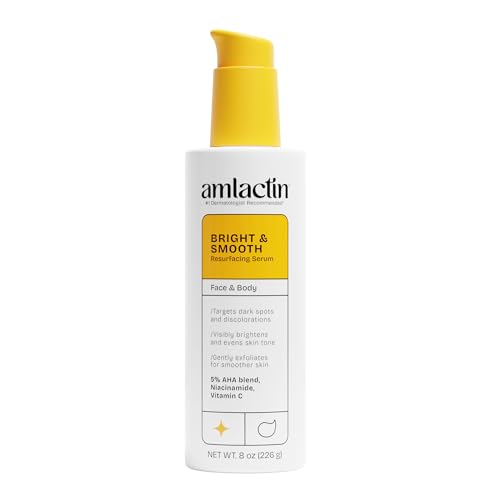
Best for brightening and resurfacing, this serum uses a 5% AHA blend to remove dull surface cells, allowing brightening ingredients to penetrate more effectively. It targets uneven texture and tone on the face and can help reveal a more radiant complexion from early uses. Suitable for normal to dry skin types seeking a visible glow with daily use. Caution: start slowly if you have sensitive skin, and monitor for irritation as with any AHA product.
The Ordinary Lactic Acid 10% + Hyaluronic Acid 2%
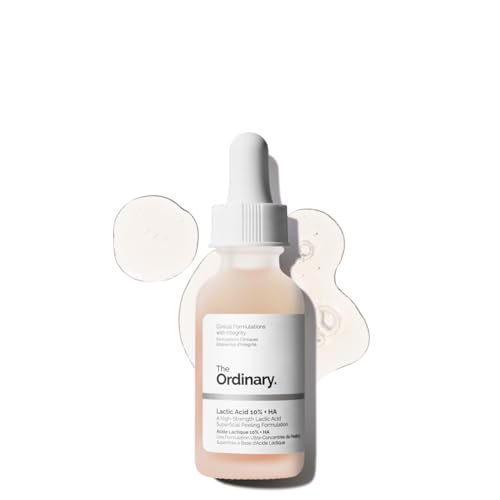
Best for texture refinement and luminosity with a hydrating boost, this serum delivers a high-strength lactic acid exfoliation (10%) paired with hyaluronic acid for moisture. Tasmanian Pepperberry extract helps reduce irritation for many users. Choose this if you want a potent exfoliant with added hydration, but avoid if you have very sensitive or reactive skin without patch testing first.
AmLactin Daily Nourish 5% Face & Body Lotion

Best for daily use, this lotion blends lactic acid at a gentle 5% concentration with skin-renewing ceramides, niacinamide, and vitamins. It both exfoliates and nourishes, offering a streamlined routine for smoother, more hydrated skin. It’s ideal for those who want a single product that works on facial and body skin, reducing product clutter. Caution: some users may prefer a dedicated facial formula if they have very sensitive facial skin.
AmLactin Daily Nourish Body Lotion, 12% Lactic Acid

Best for comprehensive body care, this 12% lactic acid formula exfoliates and hydrates in a single step. It’s designed for broader areas needing renewal, including elbows, knees, and arms, while offering moisture retention. Choose this if you want stronger exfoliation for non-face areas or have dry, flaky skin on the body. Limitation: not specifically labeled for facial use; apply with care on facial skin and patch test first.
AmLactin KP Bumps Be Gone Body Cream
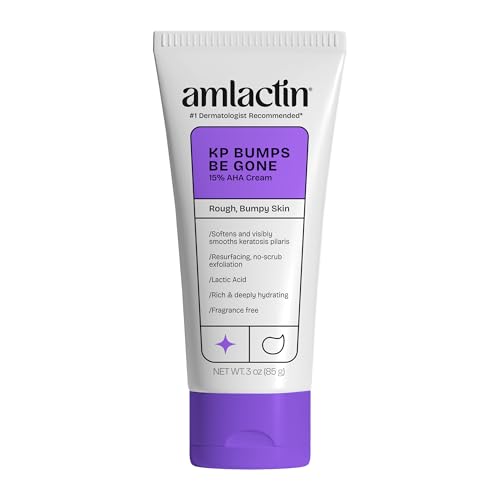
Best for keratosis pilaris and rough patches, this 15% lactic acid formula targets bumpy skin on the body while providing intense moisture. It’s particularly helpful for dry, textured areas on arms or legs. Use as part of a targeted KP care routine. Limitation: designed for body use; facial application is not recommended on all skin types and should be patch-tested if attempted.
Major Ammonium Lactate 12% Moisturizing Cream

Best for robust hydration and renewal in dry, rough skin, this 12% lactic acid cream provides exfoliation alongside humectant moisture. It helps soften and renew skin textures and can be used on larger surface areas where dryness is persistent. Limitation: high lactic acid content may require cautious use on sensitive areas; start with limited applications and monitor skin response.
Buying Guide: Lactic Acid Lotion For Face
- Strength vs. sensitivity: Higher percentages (like 10% or 12%) deliver stronger exfoliation but may cause irritation. Start with lower concentrations, especially if you’re new to AHAs.
- Formulation focus: For facial use, prefer products labeled for the face with added hydrating ingredients like hyaluronic acid or ceramides to reduce dryness and irritation.
- Frequency: Many facial lactic acid products are suitable for daily or every-other-day use. Patch testing for 24–48 hours helps identify sensitivity before full routine integration.
- Texture and skin type: Gel or serum textures often work well for oily or combination skin, while cream-based formulas can suit dry or mature skin needing extra moisture.
- Sun exposure: AHAs can increase sun sensitivity. Pair with broad-spectrum sunscreen daily to preserve results and protect skin.
- Face vs. body: If targeting body concerns (KP, rough patches), consider higher-strength body formulas and reserve lighter facial products for facial use unless the label specifies multi-area application.
- Patch testing: For sensitive or reactive skin, perform a patch test on a small area for 24–48 hours before expanding use to the face.
FAQ
- Q: Can I use lactic acid every day on my face?
A: Some products are designed for daily use; others should be used less often. Follow product directions and start gradually to gauge tolerance. - Q: Will lactic acid help with dark spots?
A: Lactic acid can improve uneven tone and texture, which may reduce the appearance of dark spots over time with consistent use. - Q: Do I need to moisturize after applying lactic acid?
A: Yes. Lactic acid can be drying, so follow with a suitable moisturizer to lock in hydration and reduce irritation. - Q: Can lactic acid cause redness or stinging?
A: Some mild tingling or redness is common with AHAs, especially at higher strengths. If irritation persists, reduce frequency or discontinue use and consult a dermatologist. - Q: Should I avoid sun exposure after using lactic acid?
A: Yes. AHAs can increase sun sensitivity, so apply sunscreen daily and limit sun exposure while using the product. - Q: Can lactic acid be used with other active skincare ingredients?
A: It’s often compatible with hyaluronic acid, ceramides, and vitamin C in certain formulations. Avoid layering strong acids with other potent actives without guidance.